Car rental payment processing for agencies and fleets
Car rental payment processing covers the whole rental: a reservation deposit, a security hold at pickup, an extension charge and a return settlement for fuel, tolls or damage. You take cards at the counter, by phone and by payment link, and we store a card only with the renter's authorization.

- PCI DSS Level 1
- SOC 2 Type II
- All major cards: Visa, Mastercard, Amex, Discover, UnionPay, Diners Club & PIN Debit
- Interchange-plus available
- Specialist onboarding support
How car rental agencies get paid
Car rental deposit payments are only the first of five moments when a rental agency collects money: when a reservation is booked, when keys are handed over, when the renter extends, when the car comes back and when something is disputed. Each moment needs its own consent and its own record.
Reservation deposits
A renter books by phone or online and pays a deposit to hold a vehicle class. You send a payment link or key the card on the virtual terminal. The deposit is applied to the final invoice, and the receipt carries the reservation number.
Pickup payments and security holds
At the counter the renter taps or inserts a card on a terminal. Staff confirm the license, sign the agreement and place the hold the agreement describes. The hold amount, the card used and the contract number are saved with the transaction.
Extensions and revised agreements
A renter who keeps the car longer agrees to a revised end date and daily rate, by phone or by message. You charge the added days with a payment link or the virtual terminal, and the new agreement is filed beside the original.
Return settlement and later charges
When the car comes back, you total fuel, mileage, tolls, cleaning or damage against the signed terms. The renter receives an itemized invoice, and any charge after return follows the consent you documented at pickup.
How do you authorize a security deposit on a rental car?
A car rental security deposit is placed as an authorization hold on the renter's card at pickup, using the amount and wording in the signed agreement. Which cards and channels support a hold varies, and your RapidCents representative will walk you through the options for your agency before you launch.
Run the hold at the counter
Staff confirm the renter and the card, read the hold amount from the agreement and run it on the terminal as an authorization. The agreement number goes in the reference field so the hold can be found by contract, plate or renter name.
Set the terms before the hold
Put the hold amount, what it covers, how long it may last and how it is released in writing, and have the renter sign. Hold release timing depends on the card issuer, so never promise the renter a date. Your RapidCents representative can show you which hold types your terminals support.
A four-day compact, deposit then hold
Say an agency books a compact for four days, collects the deposit at reservation, then places a hold at pickup. The car returns clean, so staff release the hold or let it expire per the agreement. Final charges are totaled on the invoice, not taken from the hold.
How are rental extensions charged?
A rental extension is charged by agreeing a revised end date and rate with the renter, recording that agreement and then collecting the added days by payment link or on the virtual terminal. The original hold may need a revision as well, and your RapidCents representative can show you how.
Agree the new dates first
Call or message the renter, read back the new return date, the daily rate and any added hold, and save their reply. Send a payment link or key the charge on the virtual terminal only after the renter has agreed to the revised amount.
Handle the open hold
A hold sized for the original dates may not cover a longer rental. Your RapidCents representative will show you whether to add to the hold or place a fresh one, and when the first one is released. Do not stack holds without telling the renter.
A week-long rental stretched by three days
Say a renter on a week-long booking calls on day six to keep the car for three more days. The agent sends a payment link for the added days, the renter pays on their phone, and the revised agreement is attached to the original contract number.
RapidCents products for car rental agencies
Countertop terminals take pickup payments and holds, the virtual terminal handles phone reservations and extensions, the Secure Card Vault keeps authorized cards on file, and Disputes organizes evidence and deadlines.
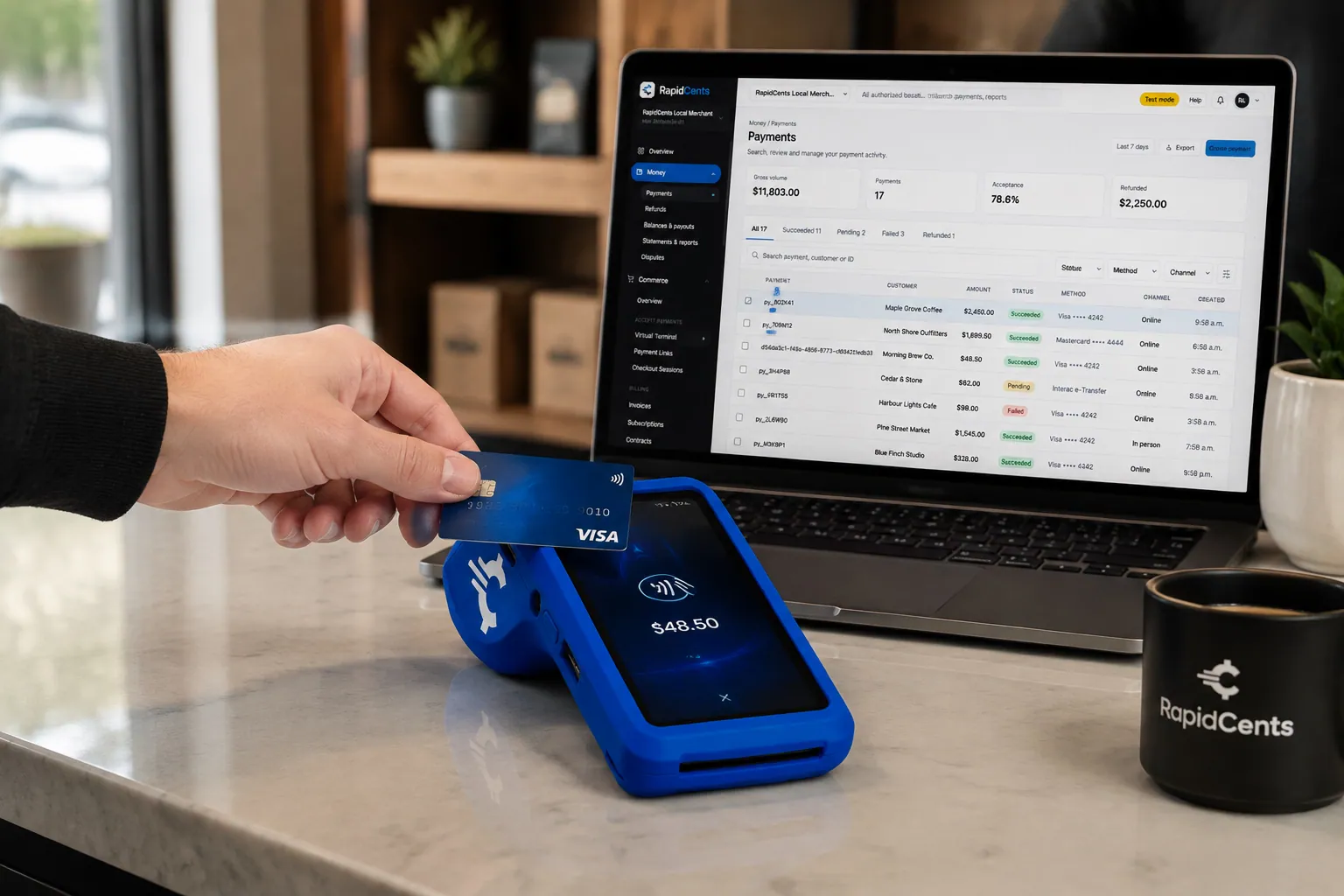
A fixed RapidCents countertop terminal taking card payments at the till, with settlement visible on the dashboard. Countertop Terminals
RapidCents countertop terminals sit at retail counters, restaurant hosts and reception desks where speed and…
Explore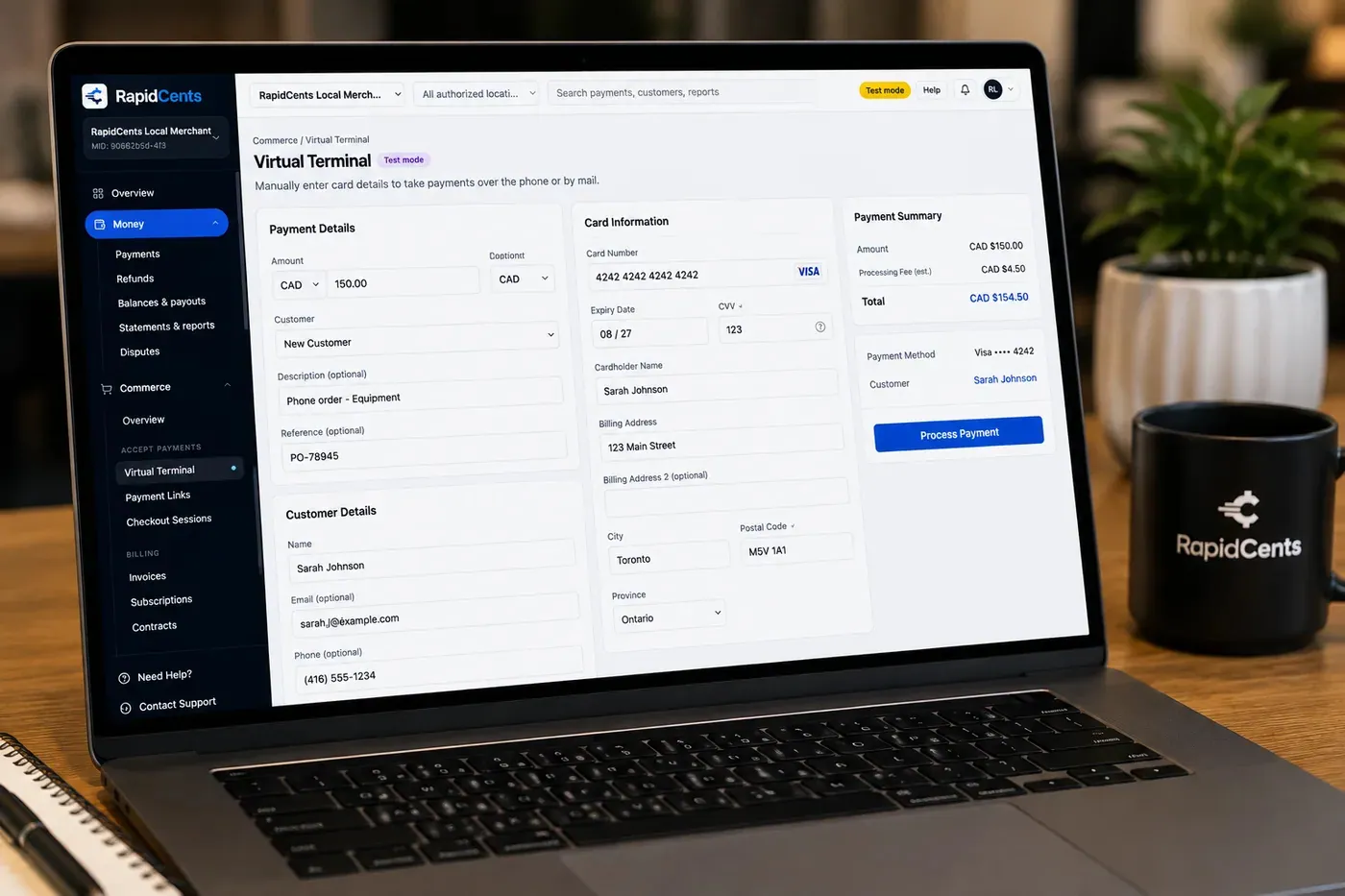
The RapidCents virtual terminal: payment details, card number, expiry and CVV keyed by hand on the left, with a payment summary on the right showing the amount, the estimated processing fee and a Process Payment button. Virtual Terminal
The RapidCents virtual terminal lets authorized staff enter mail-order and telephone-order payments through a…
Explore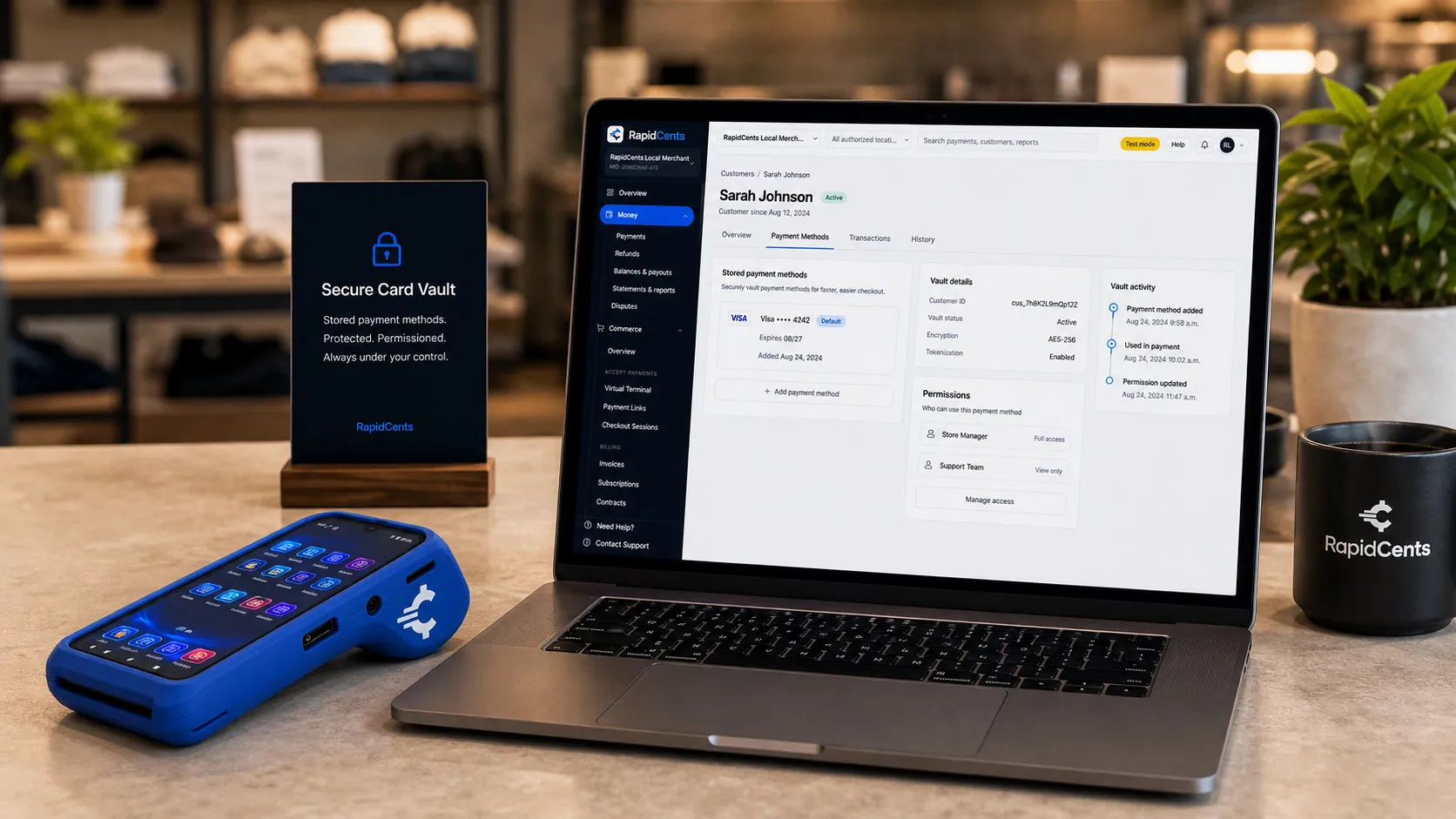
Card credentials sit in the RapidCents vault rather than in merchant software, with a terminal on the desk for new captures. Secure Card Vault
The vault stores tokenized payment methods against a customer record so staff can charge a returning…
Explore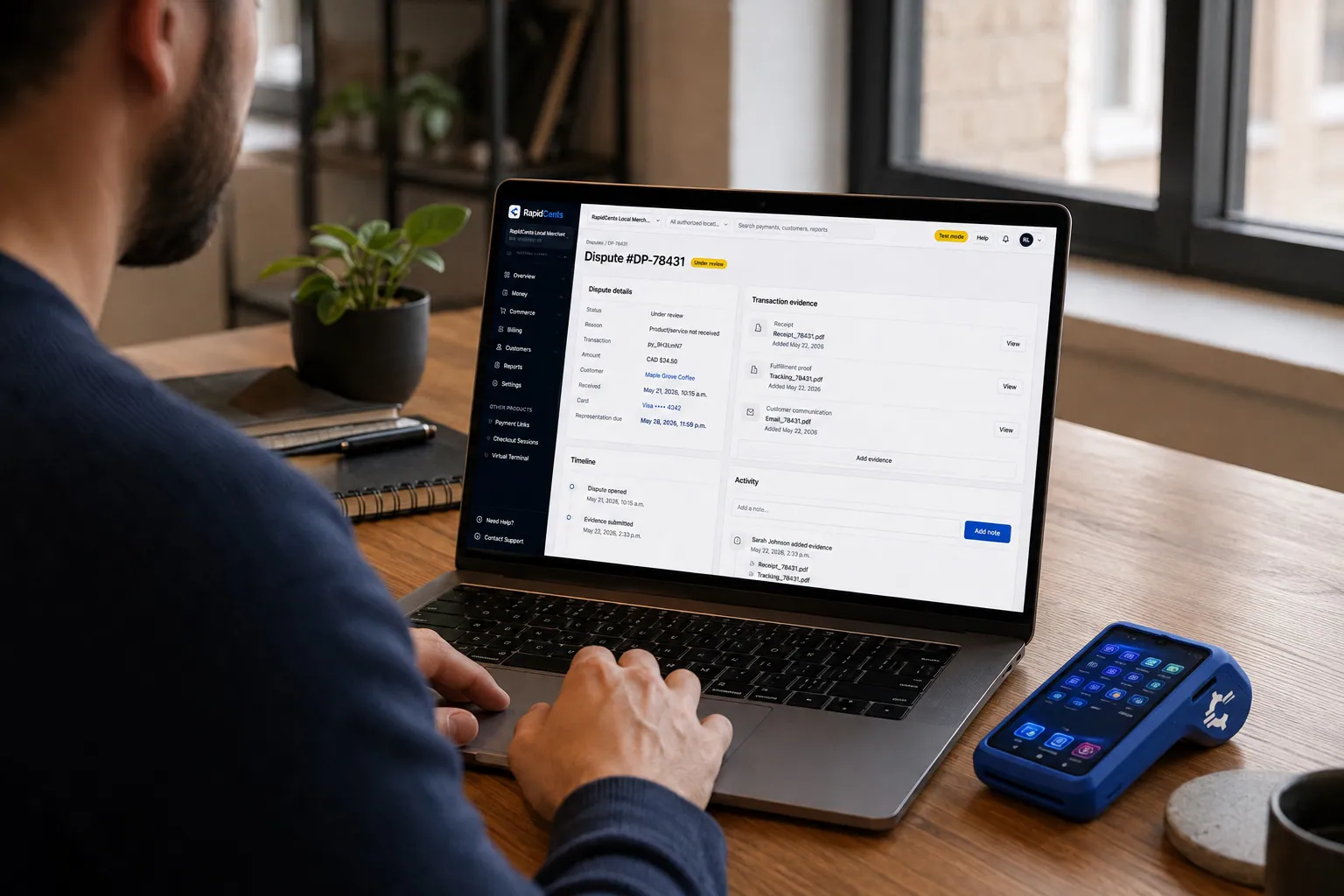
A merchant works a RapidCents dispute case on the dashboard, with the original terminal sale still on the desk. Disputes
RapidCents disputes centralizes chargeback notifications, response deadlines and evidence upload in an inbox…
Explore


Can you charge a renter after the car is returned?
You can charge after return where the renter agreed to it in writing. Late fees, fuel, tolls and damage need documented consent, evidence and an itemized invoice. A rental never gives you an automatic right to charge a card again.
Consent comes first
The signed agreement should list which later charges may apply, how you will tell the renter and how long after return you may bill. If the renter has not agreed to a stored card, you cannot save or reuse it. Your RapidCents representative will help you pick the right flow.
Keep the evidence
Save pickup and return photos, odometer and fuel readings, toll statements and the repair estimate with the contract. Send the renter an itemized invoice with a payment link. These records are what you submit if the charge is disputed.
A toll notice nine days after return
Say a toll notice reaches the agency nine days after return. The agreement lists tolls as a billable item, so the agency emails the notice, the admin fee and a payment link. If the renter disputes it, the agency uploads the signed terms and the notice.
What does car rental credit card processing cost?
Car rental credit card processing is priced on interchange-plus: interchange passes through at cost, you pay your RapidCents markup as set out in your Fee Schedule, plus fees for equipment or services if applicable. It is month to month with no fixed term. Your own rental mix decides the total.
What drives your cost
Interchange varies by card type, such as debit, credit, premium or commercial, and by how the card is taken. A tapped or inserted card at the counter is not priced like a keyed card by phone. Corporate and rewards cards are common in rental, so your mix matters.
What to bring to compare
Bring recent processing statements, your split of counter, phone and online payments, average rental ticket, deposit and hold activity, refund volume and chargeback history. Larger tickets and more keyed cards change the picture for a rental agency.
Run Fee Check
Fee Check reads an uploaded processing statement and shows interchange separately from markup, so you can compare quotes in writing. Ask every provider to put the markup, equipment fees and service fees on paper.
Will RapidCents work with your rental software?
RapidCents integrates with many major platforms through APPIE and RapidBridge, so most agencies keep the rental or fleet software they run today. The right option depends on your software vendor and version, and your RapidCents representative will walk you through it. Accounting connects to QuickBooks Online and Xero.
Rental and fleet software
Point of Rental, Texada, Booqable, EZRentOut and Rentman are rental management tools that agencies and rental yards use. Some bundle their own processor or name a gateway. Tell your RapidCents representative which one you run, and they will show you how payments connect, whether through APPIE, RapidBridge or a payment link.
Reservation and booking tools
Website booking engines, telematics and counter software each handle deposits in their own way. A payment link sent outside the software works well, and staff record the payment against the contract. Your RapidCents representative can show you how references and refunds line up with your vendor's system.
Accounting software
RapidCents connects settled transactions, fees and refunds to QuickBooks Online and Xero, and SAP and NetSuite import settlement files, so your rental ledger and your deposits match.
Payment options for car rental agencies
RapidCents serves merchants in Canada and the United States. The payment methods, bank-payment options and settlement currency for a car rental agency follow the country of the merchant account, and your RapidCents representative explains what fits yours.
Cards at the counter and by phone
Card acceptance at the counter, by phone and by payment link is the common base. Debit networks and hold flows differ by account, so your RapidCents representative will show you what is switched on for your agency.
Bank payments and currency
Corporate accounts sometimes prefer to pay by bank transfer. Whether that is offered, and in which currency your deposits settle, follows the country of your merchant account. Your RapidCents representative will explain both before you promise a method to a renter.
How do you switch rental processors without losing records?
Switching rental processors means listing open rentals, holds, stored cards and unpaid invoices, testing a sale, a hold and a refund, and then moving live traffic in steps. Your RapidCents representative plans the sequence with you, and moving stored cards needs both providers to agree.
Inventory what is open
List active rentals, holds that have not yet expired, reservations with deposits, stored cards, unpaid invoices and pending refunds. Note which stored cards have a signed authorization on file. Do not move cards that lack one.
Test, then run in parallel
Once your account is approved, run a test sale, a hold and release, a refund and a payment link before real renters arrive. Many agencies keep the old processor for open rentals while new bookings use the new one, until the last old hold clears.
Reconcile deposits to contracts
Map each transaction reference to a contract number, then compare settlement reports with your rental ledger. Check that fuel, toll and damage charges post to the right agreement before month end.
Payment questions from car rental agencies
What is the best payment processor for car rental agencies?
The right processor supports your whole rental lifecycle at a price you can read in writing. Look at hold and deferred-charge support, counter and phone acceptance, stored card controls, dispute tools, software fit and the quote itself. RapidCents shows interchange and markup separately, so you compare written quotes rather than headlines.
How much does credit card processing cost for a car rental agency?
It depends on your card mix, channels and ticket size. RapidCents prices on interchange-plus: interchange at cost, your RapidCents markup as set out in your Fee Schedule, and fees for equipment or services if applicable. It is month to month with no fixed term. Upload a statement to Fee Check to see interchange separate from markup.
Can Point of Rental, Booqable or other rental software work with RapidCents?
RapidCents integrates with many major platforms through APPIE and RapidBridge. Some rental platforms bundle their own processor, others name a gateway, and a few work with a payment link used outside the software. The right option depends on your software vendor and version. Tell your RapidCents representative whether you run Point of Rental, Texada, Booqable, EZRentOut or Rentman, and they will walk you through it.
How can a car rental agency switch processors without losing payment history?
List open rentals, unexpired holds, stored cards, deposits and unpaid invoices, export your transaction history, then test a sale, a hold and a refund before moving live traffic. Keep the old processor for open rentals if needed. Moving stored cards needs the renter's authorization on file, and your RapidCents representative coordinates the move with you.
Which payment options can a car rental agency offer?
A car rental agency can typically offer credit and debit cards at the terminal, by phone and by payment link, plus bank payments for corporate accounts. RapidCents serves merchants in Canada and the United States, and the methods, hold flows and settlement currency follow the country of your merchant account. Your RapidCents representative will walk you through yours.
Can I authorize a security deposit on a rental car?
Often yes. Place the hold as an authorization using the amount and terms in the signed agreement, and tell the renter how it is released. Release timing is controlled by the card issuer, so never promise a date. Your RapidCents representative will show you the hold flow for each card type and channel.
How are rental extensions charged?
By agreeing a revised end date and rate with the renter, recording that agreement and collecting the added days with a payment link or the virtual terminal. Your original hold may also need revising. Do not charge a stored card for an extension the renter has not agreed to.
Can I charge a renter after the car is returned?
Only where the renter agreed to it in writing. A rental does not give you an automatic right to charge a card again. Document the consent, keep the evidence, send an itemized invoice and expect that the renter may dispute the charge.
How do car rental agencies respond to a damage or toll dispute?
Respond within the deadline with the signed agreement, pickup and return photos, odometer and fuel readings, the toll notice or repair estimate and your itemized invoice. The Disputes inbox lists the deadline and lets you upload evidence. Evidence helps, but the card issuer decides, and no outcome can be promised.
Can the same card be used for the deposit, the rental and the final balance?
Yes, if the renter agreed to it. Save the card to the renter's record with their authorization, and apply the reservation deposit to the final invoice with the contract number as the reference. If a different card pays the balance, record both against the same contract so finance can match them.
What MCC is used for car rental agencies?
MCC 7512 is commonly associated with car rental agencies. RapidCents sets the correct merchant category during onboarding, based on what your business actually sells, such as rentals, leases, delivery or vehicle sales. If you run more than one line of business, tell your representative when you apply so each is classified correctly.
Related industries
Equipment rental shares deposits, holds and return balances with car rental. Automotive businesses and car dealerships also take card payments at a vehicle counter.
Equipment Rental
RapidCents helps rental yards authorize deposits at pickup, bill extensions, charge…
Automotive
Take the parts deposit, the phone-approved repair, the insurance deductible and the…
Car Dealerships
Take holding deposits by payment link, ring service and parts tickets on terminals, and…
HVAC Contractors
RapidCents lets you take the equipment deposit at the kitchen table, collect the balance…
Plumbing Contractors
Take the card at the job with Tap to Pay or a mobile terminal, send deposit links before…
Electricians
Take a materials deposit before the order goes in, get change orders approved and paid…
Construction Contractors
RapidCents helps construction contractors bill draws, collect released retainage and…
Home Services
Card payments for the work your crews finish in customers' homes: tap at the door…
Take the next step
Review your rental payment costs
Upload a recent processing statement and see interchange shown separately from your markup, so you can compare counter, phone and online rental payments.
- No obligation
- Payment specialists, not a call centre
- Secure statement upload