Fast food and QSR payment terminals for counter and drive-thru speed
Quick service is a throughput problem before it is a payments problem. The order is small, the queue is long, and every second at the terminal is a car still sitting in the drive-thru. RapidCents fits countertop terminals on the front lanes, mobile terminals at the drive-thru window, and Tap to Pay for line busting, then reports deposits store by store through multi-location payments. Fast food and quick-service restaurants are classified under MCC 5814.

- PCI DSS Level 1
- SOC 2 Type II
- All major card brands: Visa · Mastercard · Amex · Discover · PIN debit
- Interchange-plus available
- Specialist onboarding support
Operational workflows
Order rung at the register or self-serve kiosk
Tap at the counter while the next order is taken
Drive-thru payment cleared before the bag is handed out
Store-by-store sales and deposits compared each morning
Payment challenges
Seconds per car in the lane
A card that has to be presented twice at the window backs up every vehicle behind it.
One banner, many stores
Each location needs its own deposit while the operator watches all of them in a single view.
All the volume in two short windows
Sales arrive in lunch and dinner rushes, so throughput at peak matters far more than the daily average.
Choose the right payment setup for Fast Food & QSR
Choose fast food payment terminal
For Fast Food & QSR, map the counter, service, and shift close, the counter or service point, and each location and consolidated oversight before choosing a setup. Select channels that match those moments, then confirm that the chosen solution genuinely covers each channel.
Payment hardware for Fast Food & QSR
For Fast Food & QSR, choose hardware around the payment point: counter, service, or payment away from the counter. Start with the staff workflow, then confirm the suitable terminal options before purchase.
Compare payment processing fees
For Fast Food & QSR, request a written fee breakdown covering cost detail by device and location. Compare the effective cost across the real card and channel mix; do not choose on a headline rate alone.
Set up or switch Fast Food & QSR payments
To set up Fast Food & QSR payments, document the service and shift-close workflow, confirm compatibility before purchase, then test a real payment flow before going live.
Recommended products
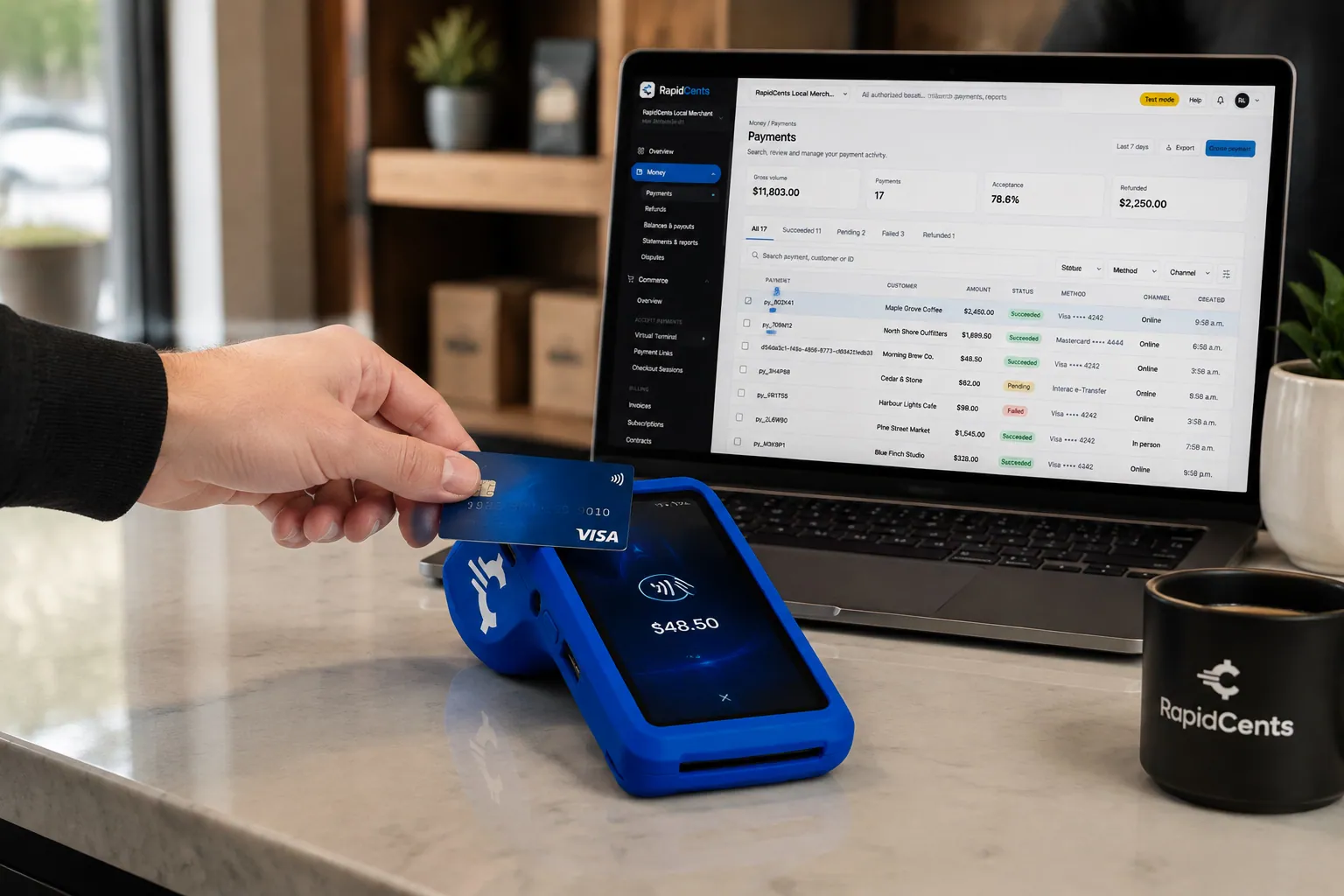
A fixed RapidCents countertop terminal taking card payments at the till, with settlement visible on the dashboard. Countertop Terminals
RapidCents countertop terminals sit at retail counters, restaurant hosts and reception desks where speed and…
Explore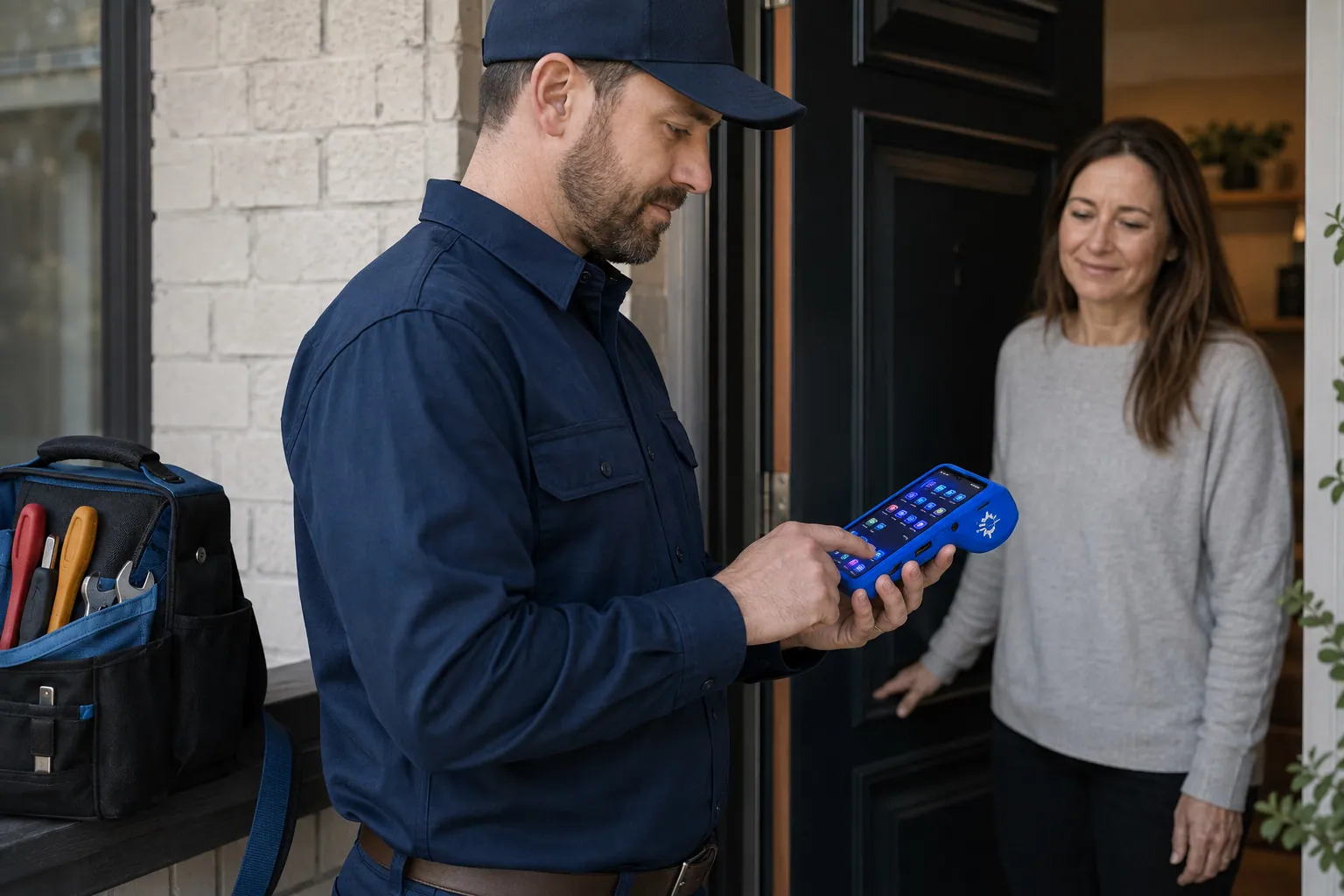
A staff member takes a card payment on a RapidCents handheld terminal, with the same sale appearing on the dashboard. Mobile Terminals
RapidCents mobile terminals are battery-powered wireless devices with LTE and Wi-Fi so staff accept payments…
Explore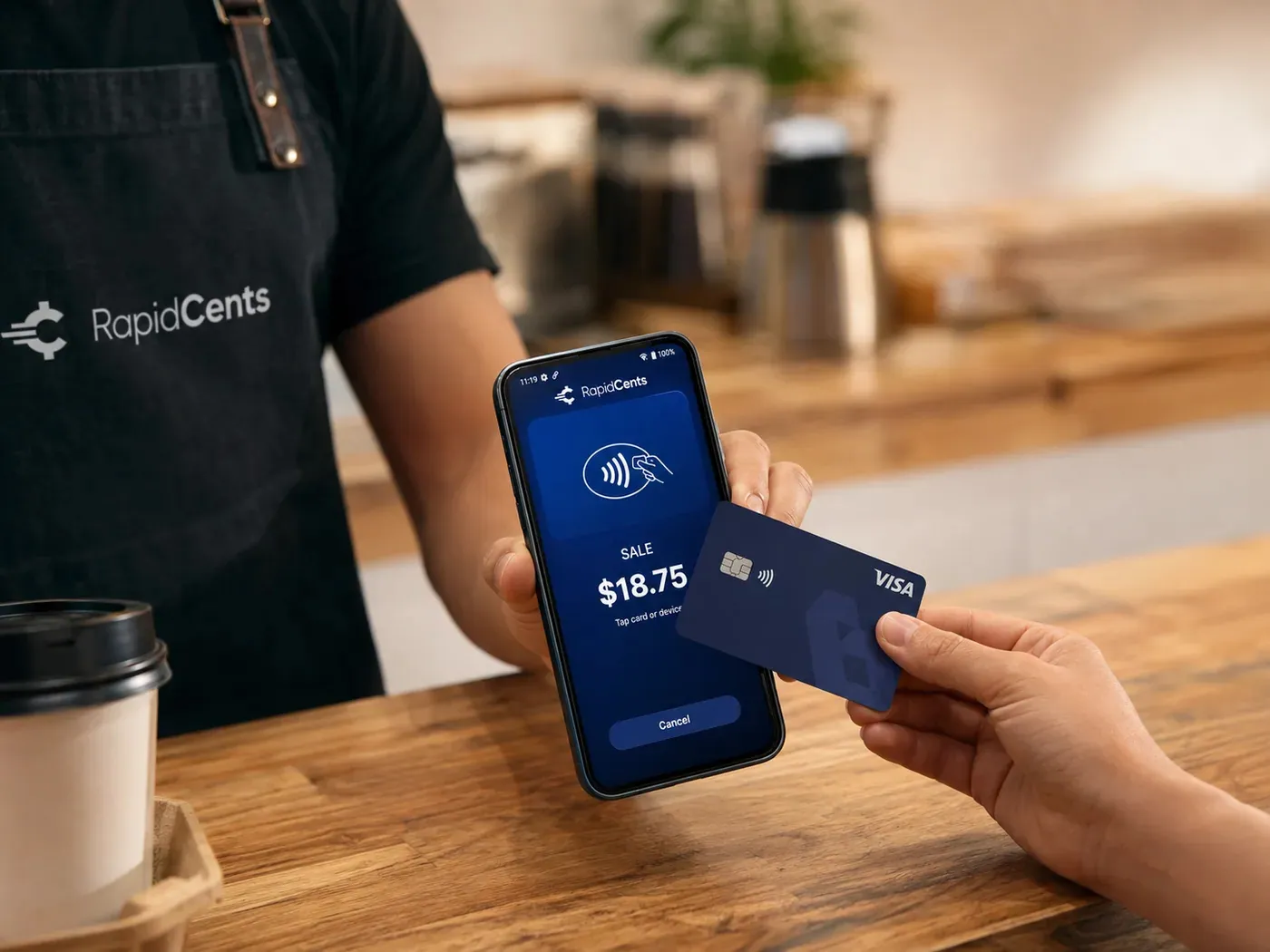
A café worker holds a phone running RapidCents Tap to Pay, showing an $18.75 sale and the contactless symbol, while a customer holds a Visa card to the screen. No separate card reader is present. Tap to Pay
RapidCents Tap to Pay turns supported iPhones and Android devices into contactless payment terminals without…
Explore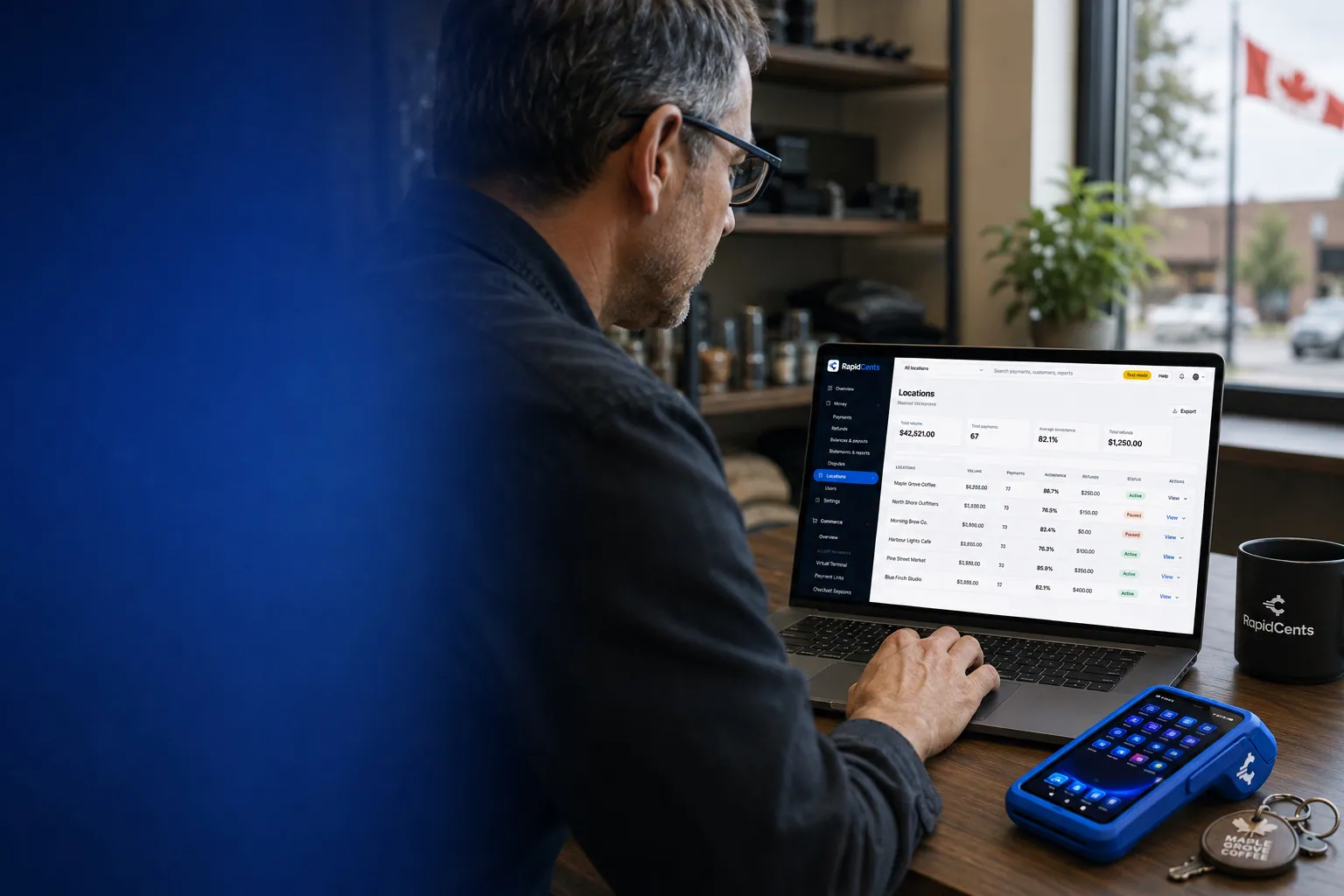
One RapidCents account comparing sales across locations, with a terminal representing the store-level capture. Multi-Location
RapidCents multi-location tools organize stores, franchises and regions in a hierarchy with location-level…
Explore


How this gets set up
Front counter lanes first
Every till gets a countertop terminal so the order and the tap happen at the same station and the queue keeps moving.
The drive-thru window
A mobile terminal at the window reaches the driver's hand without anyone leaving the booth.
Line busting at peak
Tap to Pay on a phone lets a manager take orders down the queue during the lunch rush instead of opening another till.
Store-by-store deposits
Each location reports and settles as its own store, so a franchisee sees their site and an operator sees the network.
Integrations
NCR Aloha exports
NCR Aloha exports deliver the day's transactions as a file into an Aloha-based back office — an export path, not a live posting.
Toast
Toast rings the order and holds the check, and the terminal settles that check so store sales and card deposits line up.
Revel
Revel runs the counter and drive-thru tills, and each payment closes against the order it was rung on.
Operations, security and going live
Speed of service is the number that matters
Reporting by store and by daypart shows where the rush actually slowed down, not just what the day totalled.
Cash and card mix, store by store
Deposit reporting has to show each site's card share so a manager's cash count reconciles against the till.
Contactless on a device the crew shares
A terminal on a shared counter has the card read by the device, so nothing is keyed by hand by a crew member.
Stores go live in sequence
Locations are switched one at a time, with the first store proving the setup before the rest of the network follows.
Payment questions from Fast Food & QSR
What should businesses compare when choosing fast food payment terminal for Fast Food & QSR?
Compare fast food payment terminal against the real payment journey: the counter, service, and shift close, the counter or service point, and each location and consolidated oversight. Start with the required channels and hardware, then confirm compatibility and support before committing.
What payment hardware is practical for Fast Food & QSR?
For Fast Food & QSR, hardware should match the point when staff collect payment: at the counter, during service, or elsewhere. Test each scenario before choosing a terminal form factor.
Which payment channels are relevant for Fast Food & QSR?
For Fast Food & QSR, start with the counter, service, and shift close, the counter or service point, and each location and consolidated oversight. Keep only the channels that match those moments, then verify the complete customer flow before offering them.
How should payment processing fees be evaluated for Fast Food & QSR?
For Fast Food & QSR, compare costs related to cost detail by device and location using actual transactions. Request a written breakdown of fees and terms rather than relying on an advertised rate alone.
What should be confirmed before setting up payments for Fast Food & QSR?
For Fast Food & QSR, document the service and shift-close workflow, verify the needed compatibility, and test the flow before going live. This exposes manual steps and exceptions before customers encounter them.
How should a multi-location setup be evaluated for Fast Food & QSR?
Ask how devices, users, deposits, and reporting are separated by location. Verify that the team can see the detail it needs without complicating daily operations.
What MCC category applies to Fast Food & QSR?
MCC 5814 is commonly associated with Fast Food & QSR. Our onboarding team confirms the correct category for your business.
Related industries
Restaurants
RapidCents connects counter, tableside, online ordering and multi-location restaurant…
Food Trucks
Food trucks accept credit cards curbside with battery-friendly mobile terminals, Tap to…
Catering
Caterers invoice events, collect deposits and run on-site final payments with virtual…
Cafés & Bakeries
Cafés and bakeries combine fast counter contactless, pre-order pickup payments and…
Hotels & Hospitality
Hotels manage deposits, folio charges, multi-property settlement and contactless checkout…
Bars & Nightclubs
Bars run open tabs against a pre-authorized card, split large groups at close, and…
Breweries & Wineries
Producers sell at the taproom, at farmers markets and through a beer or wine club, so the…
Ghost Kitchens
Delivery-only kitchens run several brands from one line, with orders arriving from…
Take the next step
Talk to a RapidCents specialist
RapidCents Fee Check reads a processing statement and shows interchange separately from the markup. Upload a statement for an instant breakdown, or open a merchant account and start accepting payments on one account.
- No obligation
- Payment specialists, not a call centre
- Secure statement upload