


Online ordering and payments for ghost kitchens
A delivery-only kitchen runs several virtual brands off one line, and each marketplace settles on its own schedule, which makes a single day of revenue hard to read. RapidCents gives the kitchen its own online ordering channel with payments taken directly, runs the line on restaurant POS with integrated payments, and reports across brands so the operator knows what each one earned. Delivery kitchens process under MCC 5812.

- PCI DSS Level 1
- SOC 2 Type II
- All major card brands: Visa · Mastercard · Amex · Discover · PIN debit
- Interchange-plus available
- Specialist onboarding support
Operational workflows
Marketplace orders pulled into one kitchen queue
Tickets routed to the line by brand
Direct online orders settled to the merchant account
Marketplace payouts reconciled against ticket counts
Payment challenges
Payouts on four different clocks
Each marketplace remits on its own schedule, so the bank deposits never line up with the night the kitchen cooked.
Revenue split across brands on one line
Several virtual brands share the same kitchen, and margin per brand only appears if every ticket carries the brand it sold under.
Direct orders worth keeping
Moving regulars onto the kitchen's own checkout is the only order flow it controls, and that checkout has to convert as fast as a marketplace app.
Choose the right payment setup for Ghost Kitchens
Choose ghost kitchen payment processing
For Ghost Kitchens, map online checkout and remote payment, each location and consolidated oversight, and the sale and reconciliation with business systems before choosing a setup. Select channels that match those moments, then confirm that the chosen solution genuinely covers each channel.
Payment hardware for Ghost Kitchens
For Ghost Kitchens, choose hardware around the payment point: counter, service, or payment away from the counter. Start with the staff workflow, then confirm the suitable terminal options before purchase.
Compare payment processing fees
For Ghost Kitchens, request a written fee breakdown covering online checkout and dispute handling and cost detail by device and location. Compare the effective cost across the real card and channel mix; do not choose on a headline rate alone.
Set up or switch Ghost Kitchens payments
To set up Ghost Kitchens payments, document how payment data moves into business systems and the checkout, confirmation, and refund path, confirm compatibility before purchase, then test a real payment flow before going live.
Recommended products
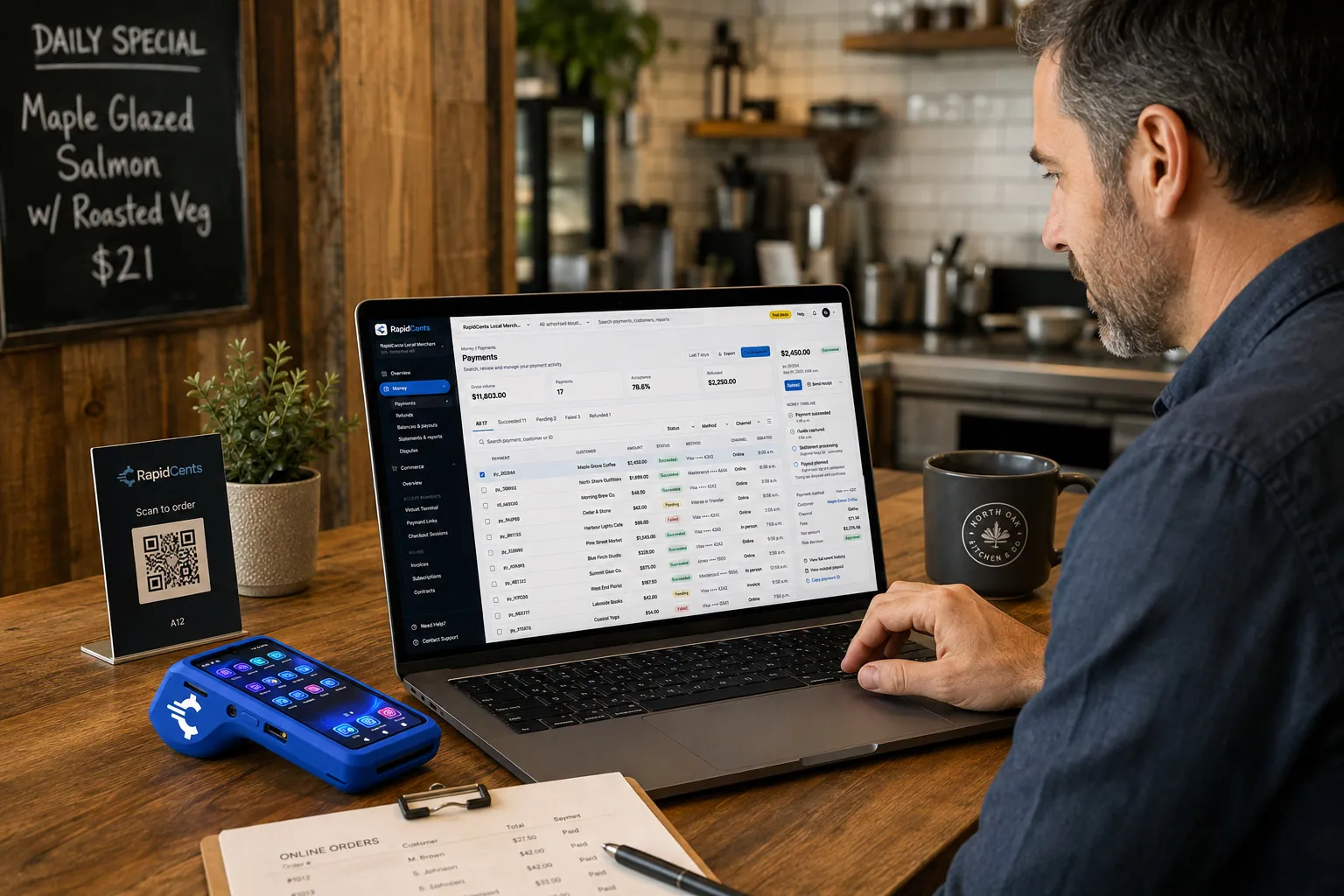
A guest pays a restaurant order online through RapidCents, with the same kitchen still running a terminal for walk-ins. Online Ordering
Publish your menu, take pickup and delivery orders on your own page, and send them straight to the kitchen…
Explore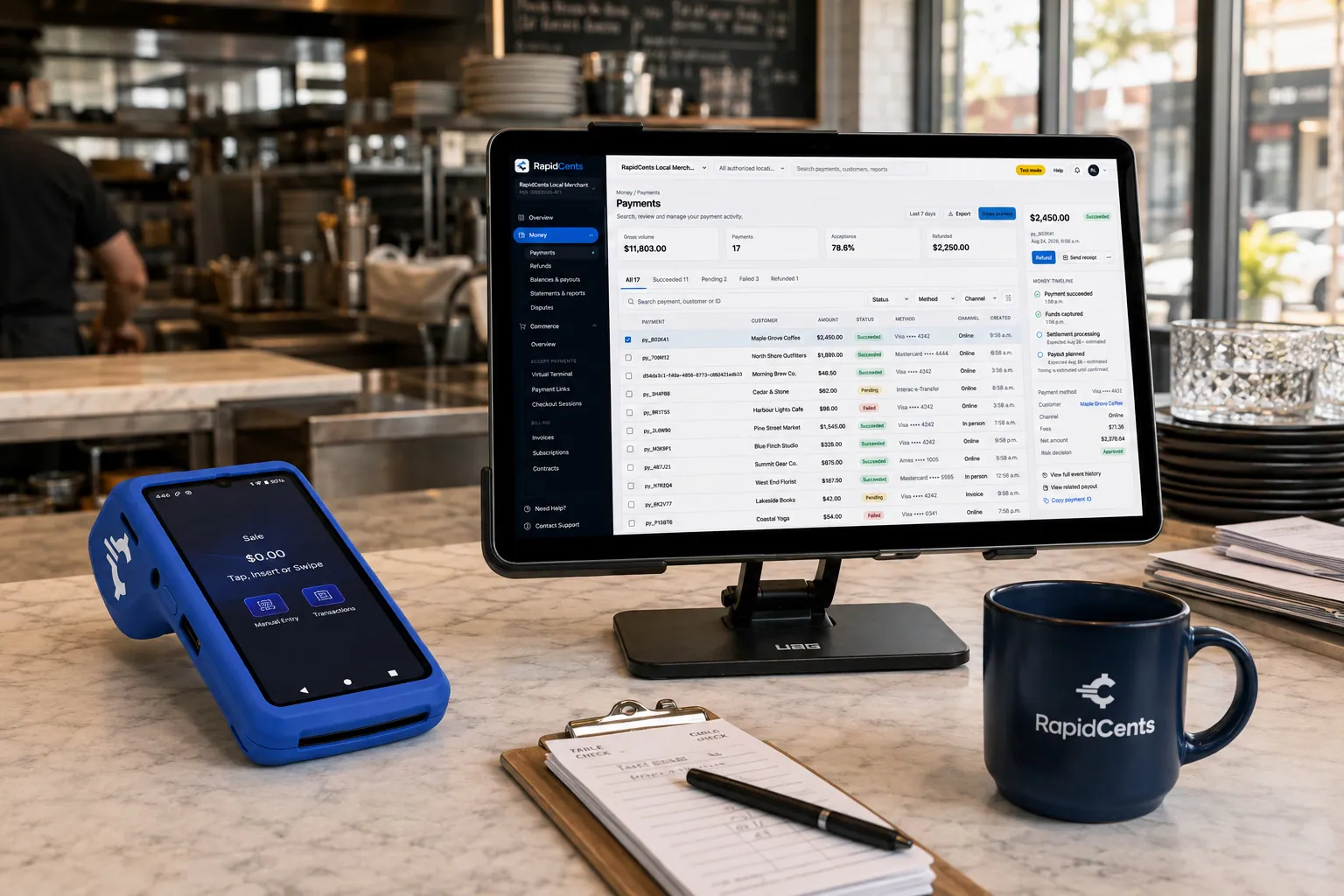
Tableside card capture on a RapidCents terminal in a restaurant, with the POS and payments dashboard on the pass. Restaurant POS
Take orders, split and transfer bills, prompt for tips at the table and close the day with reporting that…
Explore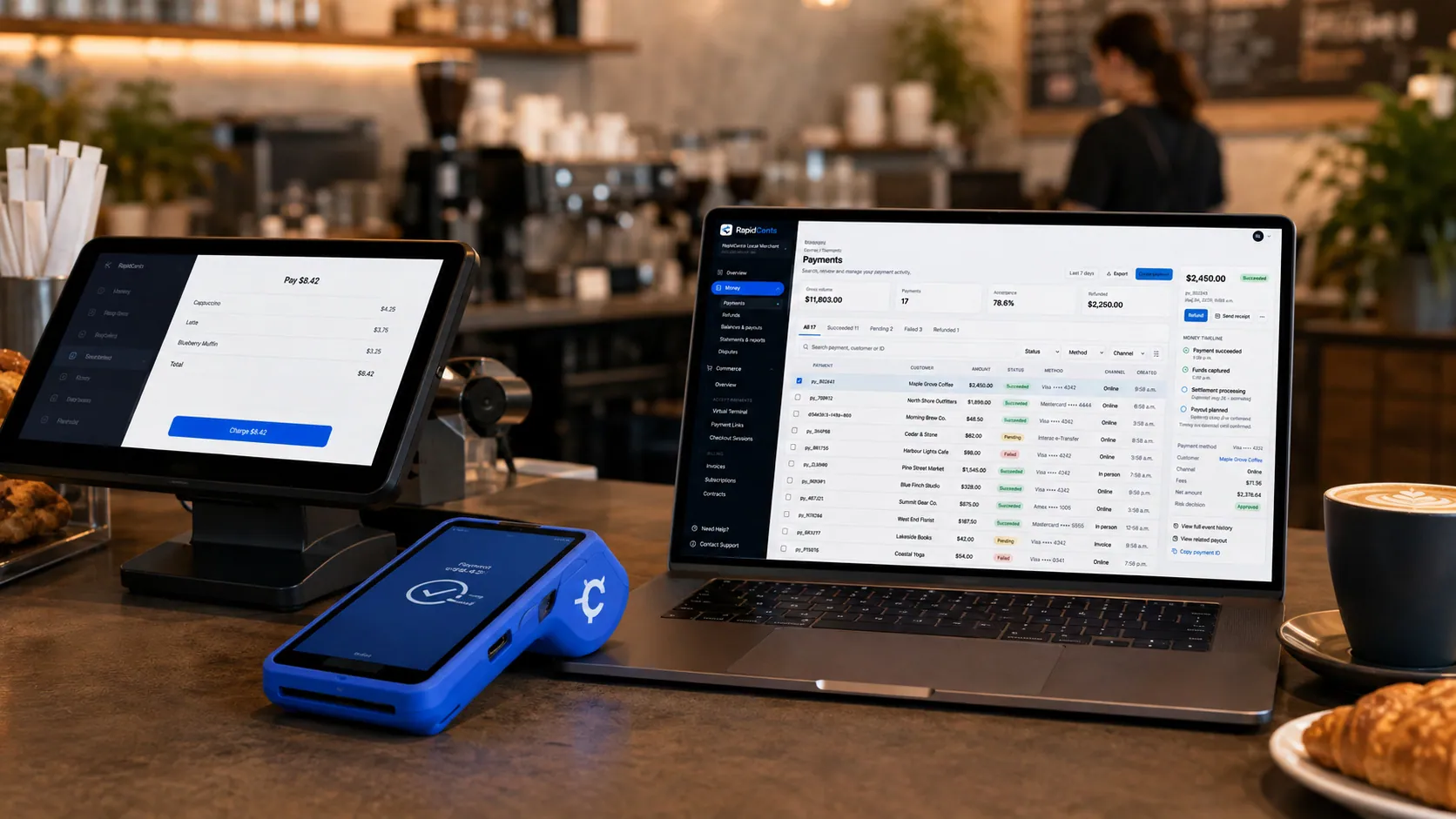
Payments taken inside existing business software through RapidCents, with the terminal and dashboard in the same workspace. Integrated Payments
RapidCents integrated payments connect certified POS and ERP systems so sale amounts, tips, refunds and…
Explore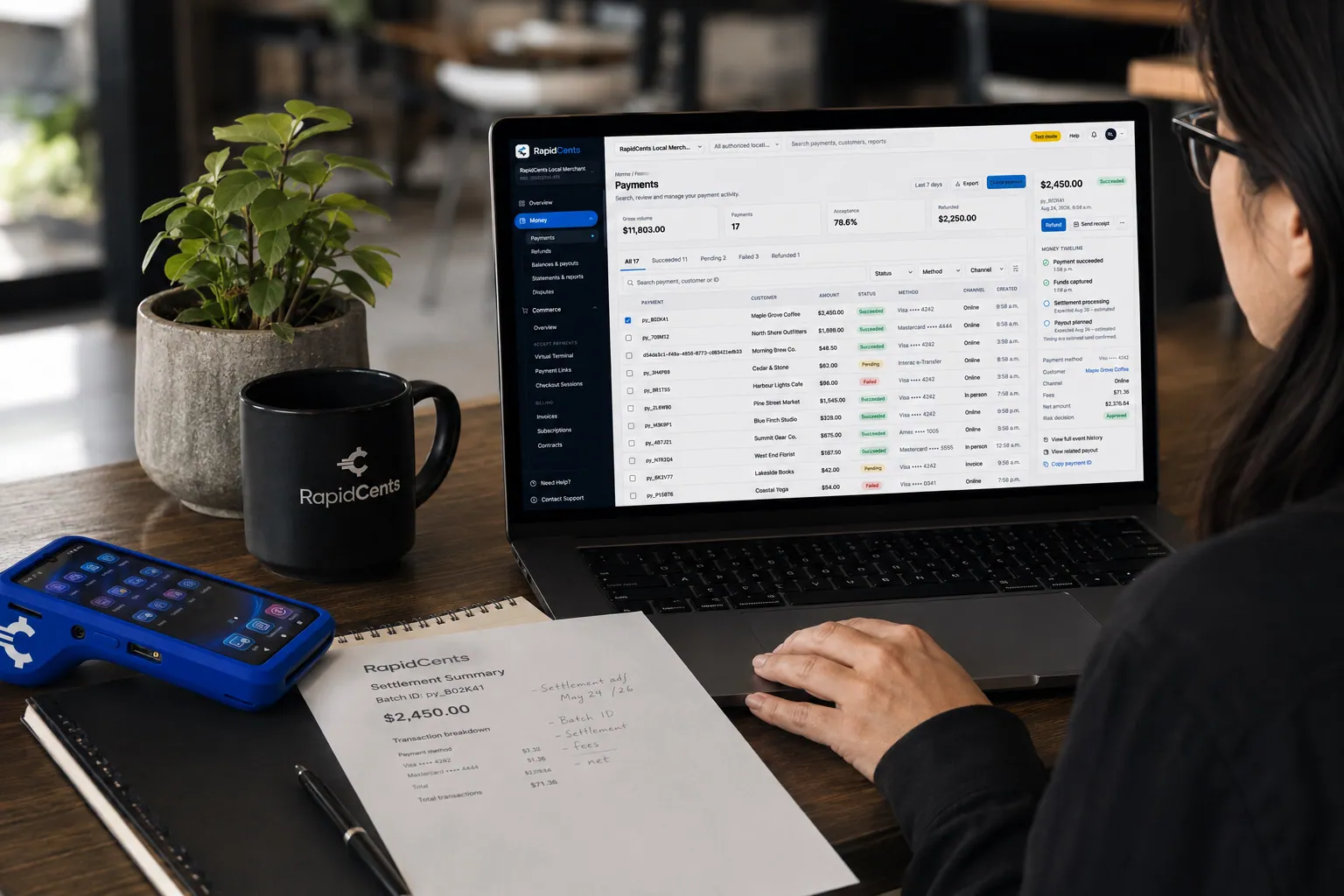
A merchant reviews RapidCents reports for volume, mix and payouts, with the terminal that took the sales on the desk. Reporting
RapidCents reporting delivers customizable transaction, settlement and fee reports with CSV and PDF export…
Explore


How this gets set up
Brands defined on one line
Each virtual brand gets its own menu and its own reporting identity, even though one kitchen and one team cook all of them.
Direct ordering opened per brand
Your own online ordering channel takes the order and the payment directly, so part of every brand's volume is not renting margin from a marketplace.
Marketplace tickets on the same screen
Aggregated orders land beside direct ones on restaurant POS with integrated payments, so the line works one queue instead of four tablets.
Brand-level day read at close
Reporting rolls the day up by brand rather than by platform, so an operator can tell which brand paid for its space and which is a menu nobody wants.
Integrations
Otter
Otter consolidates the marketplace tickets onto one screen, so the line sees every brand's orders in a single queue and reporting can still attribute them by brand.
Deliverect
Deliverect routes menus and orders between the delivery platforms and the kitchen's POS, so an out-of-stock or a price change does not have to be made four times.
UEAT
UEAT runs the direct online ordering page for a brand, and taking its payments on your own account keeps that brand's revenue settling to you rather than through a marketplace.
Operations, security and going live
Revenue by brand, settlement by source
Direct orders settle to you while marketplace payouts arrive on their own schedules, and reporting has to hold both against one day's food cost or the day cannot be read.
Refunds you never took the money for
A missing item on a marketplace order is refunded by the platform, so reporting has to tell a refund on your own direct sale apart from a deduction taken out of a payout.
Card-not-present disputes on delivery
Every direct order is card-not-present with no signature and no doorstep of your own, so keeping the order, the timestamp and the courier detail with the transaction is what answers a never-arrived claim.
Live one brand at a time
Direct ordering and payments are switched on for the strongest brand first, proven through a full dinner service, then extended across the line.
Payment questions from Ghost Kitchens
What should businesses compare when choosing ghost kitchen payment processing for Ghost Kitchens?
Compare ghost kitchen payment processing against the real payment journey: online checkout and remote payment, each location and consolidated oversight, and the sale and reconciliation with business systems. Start with the required channels and hardware, then confirm compatibility and support before committing.
What payment hardware is practical for Ghost Kitchens?
For Ghost Kitchens, hardware should match the point when staff collect payment: at the counter, during service, or elsewhere. Test each scenario before choosing a terminal form factor.
Which payment channels are relevant for Ghost Kitchens?
For Ghost Kitchens, start with online checkout and remote payment, each location and consolidated oversight, and the sale and reconciliation with business systems. Keep only the channels that match those moments, then verify the complete customer flow before offering them.
How should payment processing fees be evaluated for Ghost Kitchens?
For Ghost Kitchens, compare costs related to online checkout and dispute handling and cost detail by device and location using actual transactions. Request a written breakdown of fees and terms rather than relying on an advertised rate alone.
What should be confirmed before setting up payments for Ghost Kitchens?
For Ghost Kitchens, document how payment data moves into business systems and the checkout, confirmation, and refund path, verify the needed compatibility, and test the flow before going live. This exposes manual steps and exceptions before customers encounter them.
What should be compared in a checkout or payment gateway for Ghost Kitchens?
Compare the customer journey, reconciliation data, refund rules, and compatibility with the website or software. Validate the flow before publishing it.
What MCC category applies to Ghost Kitchens?
MCC 5812 is commonly associated with Ghost Kitchens. Our onboarding team confirms the correct category for your business.
Related industries
Restaurants
RapidCents connects counter, tableside, online ordering and multi-location restaurant…
Fast Food & QSR
Quick-service and fast-food operators need high-throughput contactless terminals…
Food Trucks
Food trucks accept credit cards curbside with battery-friendly mobile terminals, Tap to…
Catering
Caterers invoice events, collect deposits and run on-site final payments with virtual…
Cafés & Bakeries
Cafés and bakeries combine fast counter contactless, pre-order pickup payments and…
Hotels & Hospitality
Hotels manage deposits, folio charges, multi-property settlement and contactless checkout…
Bars & Nightclubs
Bars run open tabs against a pre-authorized card, split large groups at close, and…
Breweries & Wineries
Producers sell at the taproom, at farmers markets and through a beer or wine club, so the…
Take the next step
Talk to a RapidCents specialist
RapidCents Fee Check reads a processing statement and shows interchange separately from the markup. Upload a statement for an instant breakdown, or open a merchant account and start accepting payments on one account.
- No obligation
- Payment specialists, not a call centre
- Secure statement upload



