


Recurring Invoicing for Booked Visit Hours at Home Care Agencies
Home care is billed on scheduled visit hours, and the caregiver in the home never handles money — the charge settles centrally against the family's authorization. RapidCents invoices the family for the period's booked hours, runs the balance as a recurring charge by card or pre-authorized bank debit, and reports by client and by period so office staff can reconcile hours billed against hours scheduled. Home care agencies are classified under MCC 8050.

- PCI DSS Level 1
- SOC 2 Type II
- All major card brands: Visa · Mastercard · Amex · Discover · PIN debit
- Interchange-plus available
- Specialist onboarding support
Operational workflows
Visit hours booked and scheduled for the period
Family invoiced for the period's booked hours
Balance settled centrally by card or bank debit
Hours billed reconciled against hours scheduled
Payment challenges
The caregiver never handles money
The person in the home carries no reader, so every charge has to originate at the office rather than at the visit.
Hours change after the schedule is set
A cancelled or extended visit alters the amount owed after the period's invoice was drafted, so the two always need reconciling.
The payer is not the person receiving care
The authorization on file usually belongs to a family member, and the billing record has to hold both people.
Choose the right payment setup for Home Healthcare
Choose home care payment processing
For Home Healthcare, map sign-up, scheduled billing, and renewal, each location and consolidated oversight, and the invoice, retainer, and remote client payment before choosing a setup. Select channels that match those moments, then confirm that the chosen solution genuinely covers each channel.
Payment hardware for Home Healthcare
For Home Healthcare, choose hardware after mapping where and when customers pay. Compare countertop, portable, and remote-payment options against the real workflow rather than a device's advertised price.
Compare payment processing fees
For Home Healthcare, request a written fee breakdown covering scheduled billing, declined cards, and cancellations and cost detail by device and location. Compare the effective cost across the real card and channel mix; do not choose on a headline rate alone.
Set up or switch Home Healthcare payments
To set up Home Healthcare payments, document the real payment journey, confirm compatibility before purchase, then test a real payment flow before going live.
Recommended products
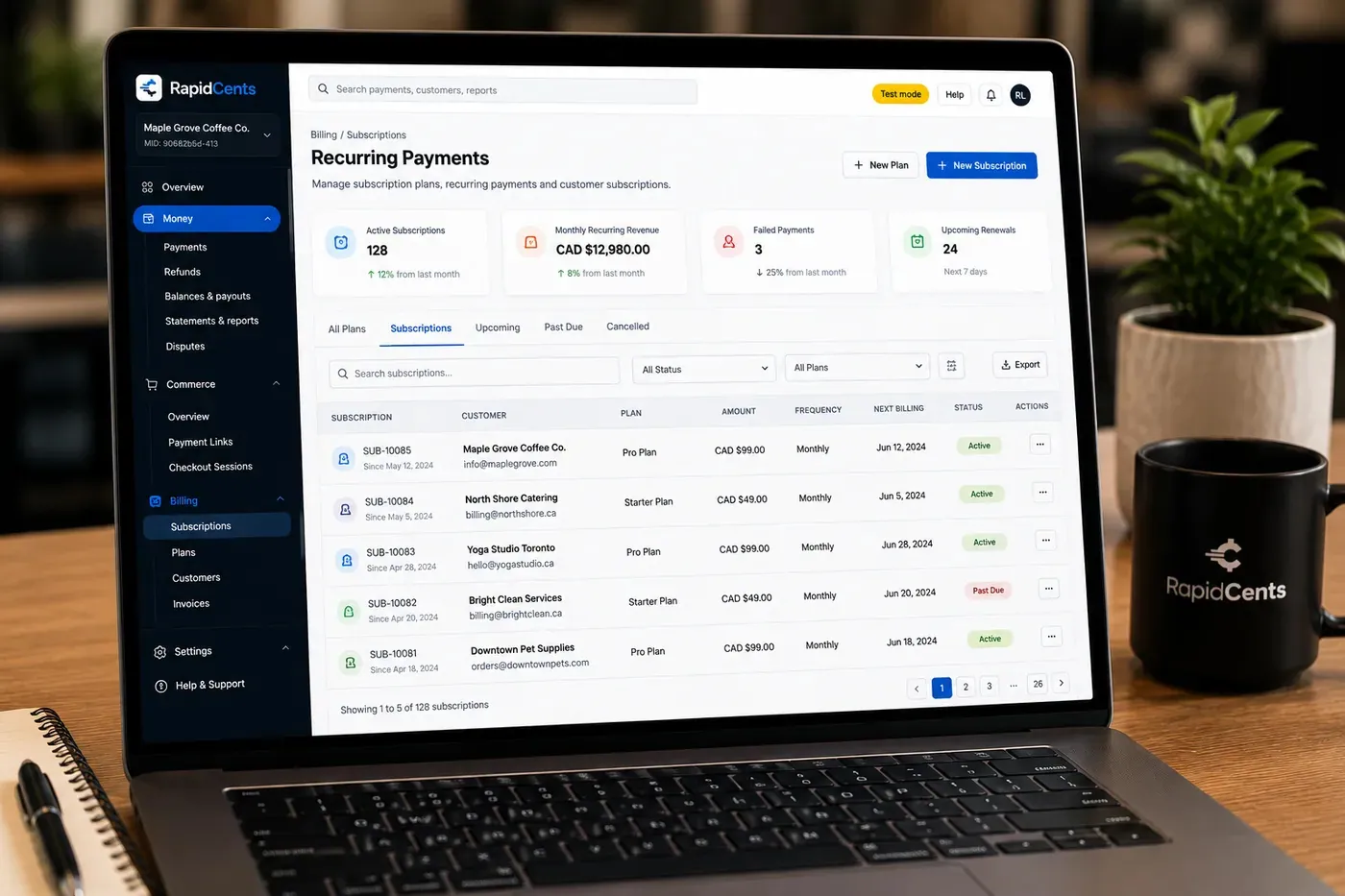
The RapidCents recurring payments screen showing active subscriptions, monthly recurring revenue, failed payments and upcoming renewals, above a list of subscriptions with their plan, amount, frequency and next billing date. Recurring Payments
RapidCents recurring payments manage subscription plans, membership renewals and installment schedules with…
Explore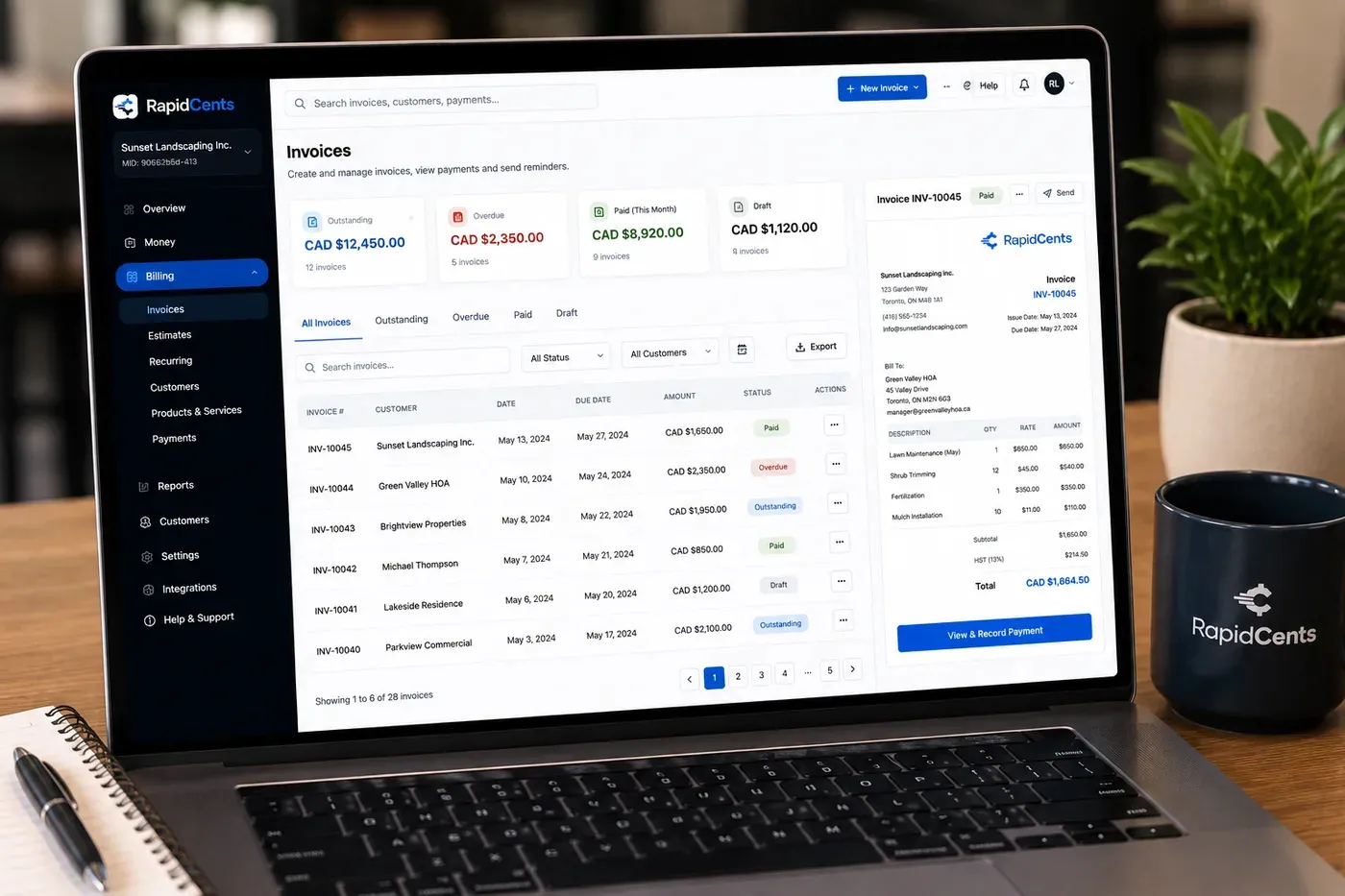
The RapidCents invoices screen: outstanding, overdue, paid and draft totals across the top, the invoice list below them, and a preview of one invoice on the right with its line items and a View & Record Payment button. Invoicing
RapidCents invoicing helps professional services, contractors and B2B suppliers create branded invoices…
Explore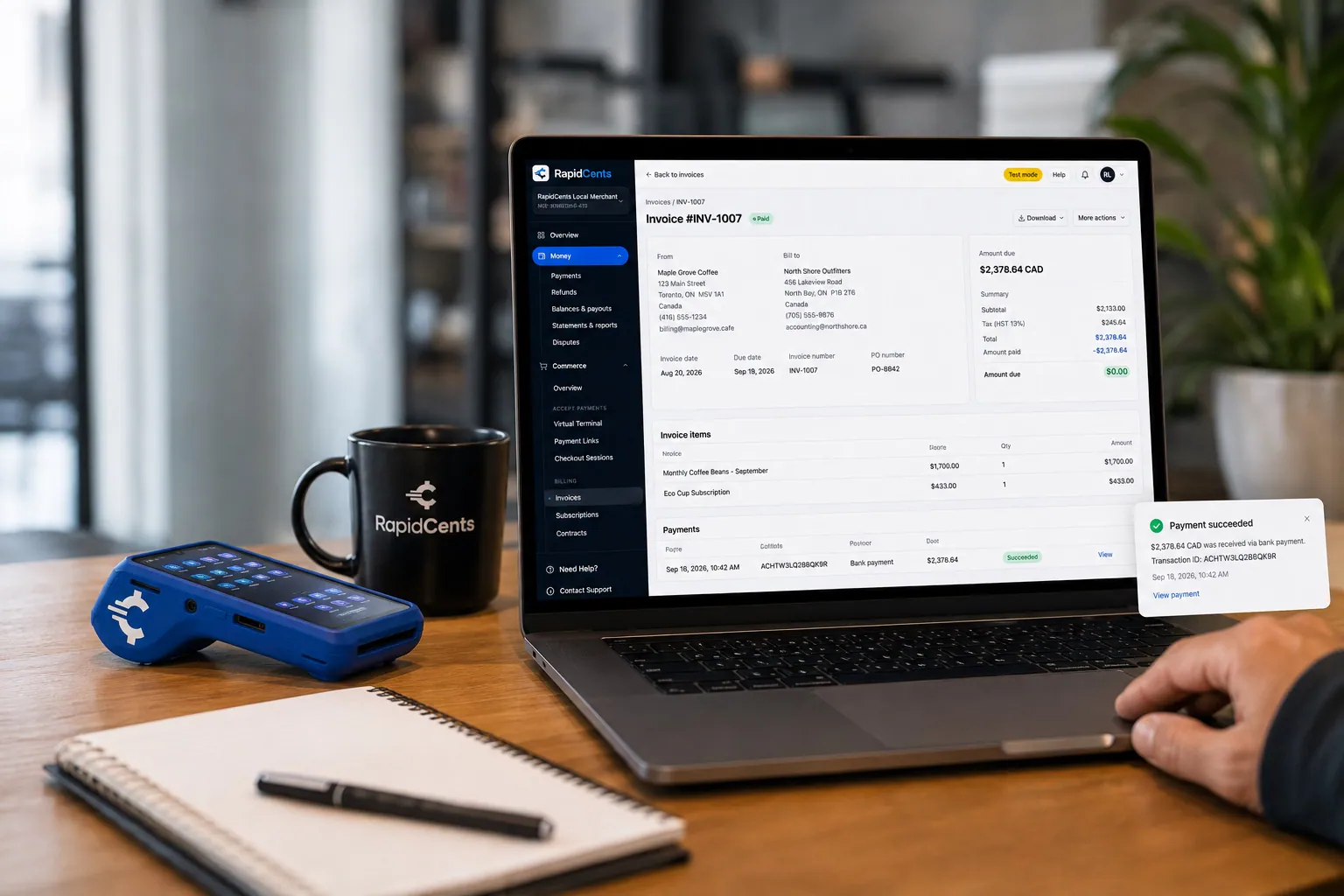
A merchant invoices a customer for bank debit through RapidCents, with card terminal capture available on the same desk. ACH / Bank Payments
Bank payments suit recurring and high-value invoices where card fees are the wrong tool. Collect directly…
Explore
A merchant reviews RapidCents reports for volume, mix and payouts, with the terminal that took the sales on the desk. Reporting
RapidCents reporting delivers customizable transaction, settlement and fee reports with CSV and PDF export…
Explore


How this gets set up
Care plan turned into a billing schedule
The hours booked in the care plan become the period's invoice, so what the family owes follows the schedule the coordinator set.
The family authorizes once, centrally
The payer authorizes card or pre-authorised debit at intake, and every period after that draws on the same authorization.
Caregivers carry no reader
Nothing is collected in the home: the visit is logged and the charge settles centrally, which keeps money out of the caregiver relationship.
Adjusted hours land on the next period
An extra overnight or a cancelled visit changes the next invoice instead of requiring a separate transaction in the field.
Integrations
AlayaCare
Visits confirmed in AlayaCare are the hours the period's charge is built from, so billing follows the schedule instead of a re-keyed total.
ClearCare
A client's ClearCare account shows the period settled once the recurring charge or bank debit clears.
Sage
Client revenue and branch totals post into Sage, so the agency's books match what was collected for each period.
Operations, security and going live
Hours billed reconciled to hours scheduled
Reporting per client and per period is the pairing the office checks, because a gap between the two is a caregiver shift that was worked or missed.
Bank debit for a care arrangement measured in months
Care that runs for months or years suits pre-authorised debit, which avoids a card expiring in the middle of an active plan.
Payment details held by the office, not by field staff
Authorizations live in the office system, so no card or bank detail travels into a client's home with a caregiver.
Rollout branch by branch
Each branch goes live with its own client list and billing period, so a multi-office agency is not switching every family in one week.
Payment questions from Home Healthcare
What should businesses compare when choosing home care payment processing for Home Healthcare?
Compare home care payment processing against the real payment journey: sign-up, scheduled billing, and renewal, each location and consolidated oversight, and the invoice, retainer, and remote client payment. Start with the required channels and hardware, then confirm compatibility and support before committing.
What payment hardware is practical for Home Healthcare?
For Home Healthcare, start with the workstation where customers pay and the space available. A test of the real flow reveals the right form factor better than a feature comparison alone.
Which payment channels are relevant for Home Healthcare?
For Home Healthcare, start with sign-up, scheduled billing, and renewal, each location and consolidated oversight, and the invoice, retainer, and remote client payment. Keep only the channels that match those moments, then verify the complete customer flow before offering them.
How should payment processing fees be evaluated for Home Healthcare?
For Home Healthcare, compare costs related to scheduled billing, declined cards, and cancellations and cost detail by device and location using actual transactions. Request a written breakdown of fees and terms rather than relying on an advertised rate alone.
What should be confirmed before setting up payments for Home Healthcare?
For Home Healthcare, document the real payment journey, verify the needed compatibility, and test the flow before going live. This exposes manual steps and exceptions before customers encounter them.
What should be confirmed before using recurring payments for Home Healthcare?
Define consent, billing cadence, change and cancellation rules, and how a declined card is handled. Ask to see the complete customer journey before offering it to customers.
What MCC category applies to Home Healthcare?
MCC 8050 is commonly associated with Home Healthcare. Our onboarding team confirms the correct category for your business.
Related industries
Healthcare
Healthcare providers collect patient payments at reception, via payment links and…
Dental Clinics
Dental practices accept front-desk, remote and scheduled payments with card-on-file…
Physio & Chiropractic
Physiotherapy and chiropractic clinics collect copays, package payments and recurring…
Veterinary Clinics
Vet clinics take exam-room payments, estimate deposits and recurring wellness plan…
Pharmacies
Independent and specialty pharmacies accept countertop, contactless and phone payments…
Medical Spas
Med spas combine high-ticket treatment packages, memberships and retail add-ons with…
Optometry
Optometry practices collect exam fees, eyewear deposits and insurance balance payments at…
Gym & Fitness Studios
Gyms and boutique fitness studios run memberships, class packs, retail and front-desk…
Take the next step
Talk to a RapidCents specialist
RapidCents Fee Check reads a processing statement and shows interchange separately from the markup. Upload a statement for an instant breakdown, or open a merchant account and start accepting payments on one account.
- No obligation
- Payment specialists, not a call centre
- Secure statement upload



